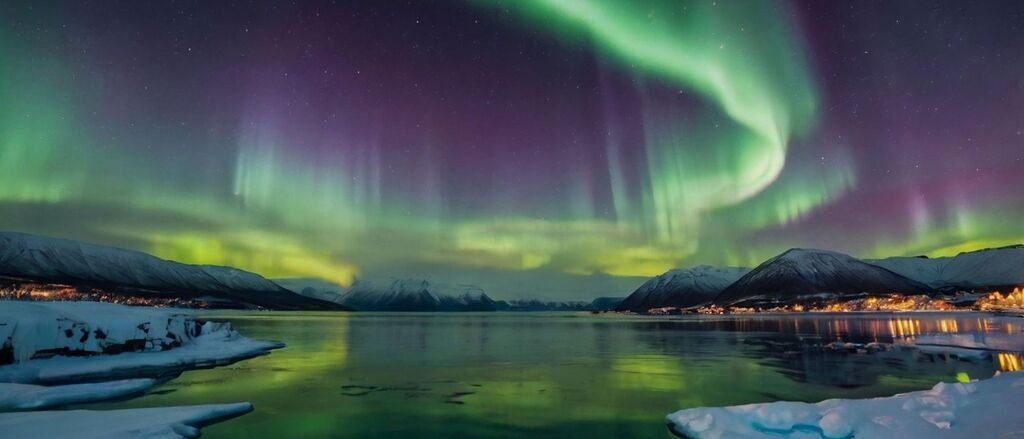
Where to see the Northern Lights in Europe: the best places and how to fly there
Monday, November 23, 2026
Where is it best to see the Northern Lights? In Europe, the top places are northern Norway (Tromsø), Finnish Lapland (Rovaniemi, Ivalo, Kittilä), Swedish Lapland (Abisko and Kiruna) and Iceland. All four sit under the "auroral oval", the ring around the Arctic where the lights appear most often, and all are a short flight from the UK and most of Europe.
The season runs from September to March, and you need three things: darkness, clear skies and a bit of luck. Below, we explain where to see the Northern Lights, when to go, how to get there by plane, and what to do if snow disrupts your flight north.
Where is the best place to see the Northern Lights?
The best place to see the Northern Lights in Europe is anywhere roughly between 65° and 70° north, with dark skies away from city lights. So if you're wondering where do you go to see the Northern Lights, these five destinations are your best bet.
Tromsø, Norway
Tromsø is the most popular Northern Lights city in Europe. It sits well inside the Arctic Circle, has plenty of tours, and is lively enough for a city break. In peak season the lights appear on average two to three times a week. Coastal weather can bring cloud, so tour operators often drive inland to find clear skies. In winter there are direct flights to Tromsø from several European cities, including London, Manchester, Madrid and Barcelona; otherwise, connect via Oslo.
Finnish Lapland
In Finnish Lapland, the Northern Lights are visible on roughly 200 nights a year. Rovaniemi is the easiest to reach and combines the lights with Santa Claus Village, which makes it a favourite with families. For darker skies, head further north to Saariselkä (near Ivalo) or Levi (near Kittilä). In winter, Rovaniemi has direct flights from more than 20 European cities, including London, Manchester and Edinburgh, and Finnair flies there daily from Helsinki all year round.
Iceland
Iceland is one of the easiest Arctic trips, with direct flights to Reykjavík–Keflavík from across the UK and Europe, and you can see the lights just outside Reykjavík. Hire a car or book a tour to get away from the city lights. The weather changes fast, so keep a few nights free.
Swedish Lapland (Abisko)
Abisko is known for its "blue hole": a patch of sky that often stays clear thanks to the surrounding mountains, even when it is cloudy elsewhere. It takes longer to get there, but your chances on any given night are among the best in Europe. Fly to Kiruna, usually with a change in Stockholm, then it's just over an hour by road or train to Abisko.
Northern Scotland
If you're in the UK, you don't always have to go abroad. During strong solar activity, the lights can be seen from the far north of Scotland, Orkney and Shetland. It is less reliable than the Arctic, but it's the cheapest and quickest option.
When is the best time to see the Northern Lights?
Where and when to see the Northern Lights go hand in hand: the best time is between September and March, on a clear night between about 9pm and 2am. In summer, the Arctic is light around the clock, so you won't see them at all.
- September and October: often clearer skies than midwinter, milder temperatures, and lakes that aren't yet frozen, so you can catch reflections.
- November to January: the longest nights, so the most hours of darkness. It's also the coldest and busiest period, with Christmas trips to Lapland.
- February and March: a good balance of darkness, snow and slightly milder weather. The weeks around the March equinox are known for strong aurora activity.
The sun's activity matters too. It runs in roughly 11-year cycles, and the current cycle has recently been at its peak, which means more frequent and stronger displays. Solar storms can even push the lights much further south than usual.
Tips to boost your chances
No one can promise you'll see the Northern Lights, but these tips make it much more likely.
- Stay at least three or four nights: clouds come and go, and more nights means more chances.
- Get away from light pollution: leave the city centre, or stay in a cabin or glass igloo outside town.
- Check the forecasts: look at the cloud forecast first, then the aurora forecast. Apps and websites show the expected activity (the Kp index) for the coming nights.
- Book a tour on your first night: guides know where the clear skies are and can drive you there. If you see the lights early, the rest of the trip is a bonus.
- Stay up late and be patient: displays often come in waves, with quiet spells in between.
- Dress for the cold: temperatures can drop well below -20°C in Lapland. Wear thermal layers, a warm hat, gloves and snow boots.
- Use your phone's night mode: phone cameras often pick up more colour than your eyes. A small tripod helps for sharp photos.
Can you see the Northern Lights from a plane?
Yes, you can see the Northern Lights from a plane, and you're above the clouds, so the weather can't get in the way. Your best chance is on an evening or night flight heading far north in winter, or on long-haul flights that cross the North Atlantic or Canada.
- Pick a window seat: the lights are usually to the north: on flights heading west, that's the right-hand side of the plane; heading east, the left. Want to know more? Find out which are the best seats on a plane.
- Cut the glare: dim your screen and reading light, and cup your hands or a blanket around the window.
- Ask the crew: on regular routes, crew often know when the lights are likely and may make an announcement.
Some pilots go a step further. When the lights were especially strong, a Finnair crew and the pilots of an easyJet flight from Reykjavík to Manchester made a full 360° turn so passengers on both sides of the plane could see them.
Flight delayed or cancelled on the way north? Your rights
If your flight is delayed or cancelled, you always have rights to help, but you can only claim compensation when the cause was within the airline's control. Winter weather in the Arctic does cause disruption, so it's worth knowing the difference before you go.
- Right to care: if you're delayed for two hours or more, the airline must give you food and drinks. If you have to stay overnight, it must also arrange and pay for a hotel and transport to it.
- Rerouting or refund: if your flight is cancelled, you can choose a refund or a new flight to your destination.
- Compensation: if you arrive more than three hours late, or your flight is cancelled less than 14 days before departure, you may be owed €250 to €600 under EU261.
Heavy snowfall or a closed runway usually counts as an extraordinary circumstance, which means no compensation. But not every winter delay is caused by the weather. Technical problems, crew shortages or a late aircraft from an earlier flight are generally the airline's responsibility, even in winter. If the airline blames the weather, it's worth checking whether that was really the cause.
Was your flight to Tromsø, Lapland or Iceland delayed or cancelled? Flight Delayed can tell you in seconds whether you're entitled to compensation. It's free to check, and you only pay if you receive compensation.



Did you like this content ?
Thanks you made our day!
Help us be better!
Well received, thanks!