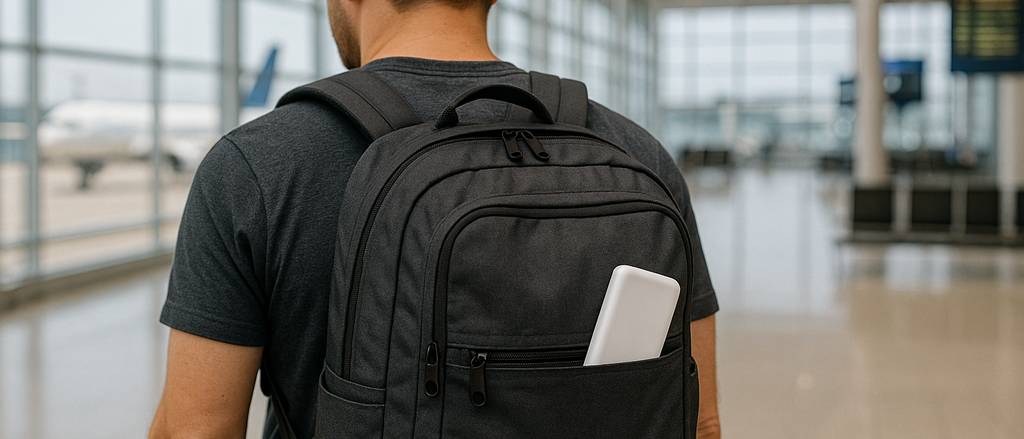
Powerbank on a plane: all rules (EasyJet, Ryanair, British Airways) + our top picks
Wednesday, October 22, 2025
A powerbank is nowadays indispensable when travelling. Whether you're on a city break or a long-haul flight, nobody wants to arrive with a dead phone or laptop. But are you actually allowed to bring a powerbank on a plane? And do different rules apply with KLM, Transavia, or foreign airlines?
In this article, we explain exactly what is and isn't permitted, how large your powerbank may be, and whether the rules differ by country (for example between the EU, the US, and China). We also recommend a number of safe and permitted powerbanks — from compact models for everyday use to powerful options that can even charge your laptop.
This way, you'll board the plane fully prepared and avoid any unpleasant surprises at the security check.
General rules for powerbanks on a plane
Powerbanks contain lithium-ion batteries — the same type of batteries found in phones and laptops. These batteries are light and powerful, but if damaged, overheated, or short-circuited, they can catch fire or even explode. This is why strict safety regulations apply worldwide for powerbanks on board aircraft.
The basic rules
Cabin baggage only: powerbanks must never be transported in the hold. There are no direct fire-suppression facilities in the cargo hold, so an overheated battery could be dangerous there.
Capacity: airlines look at the power in Wh (watt-hours), whilst manufacturers usually state mAh (milliampere-hours) on the packaging. Both express the amount of energy stored, but Wh is used for aviation safety purposes.
- Up to 100 Wh (≈ 27,000 mAh) is freely permitted in the cabin.
- 100–160 Wh (≈ 27,000–43,000 mAh) is only permitted with the airline's authorisation (usually a maximum of 2 units).
- More than 160 Wh (> 43,000 mAh) is prohibited on passenger aircraft.
Protecting the connectors: it is not compulsory to tape over the contact points, but it is strongly recommended to prevent short circuits. Store the powerbank in a case or a separate compartment, for example.
Be careful when checking in your bag: if your cabin baggage is checked in at the gate, remove the powerbank and take it on board yourself. Checked luggage containing loose batteries is often refused.
Conversion formulae:
- Wh = (mAh × 3.7) ÷ 1,000
- mAh = (Wh ÷ 3.7) × 1,000
For example:
- 10,000 mAh ≈ 37 Wh
- 20,000 mAh ≈ 74 Wh
- 27,000 mAh ≈ 100 Wh
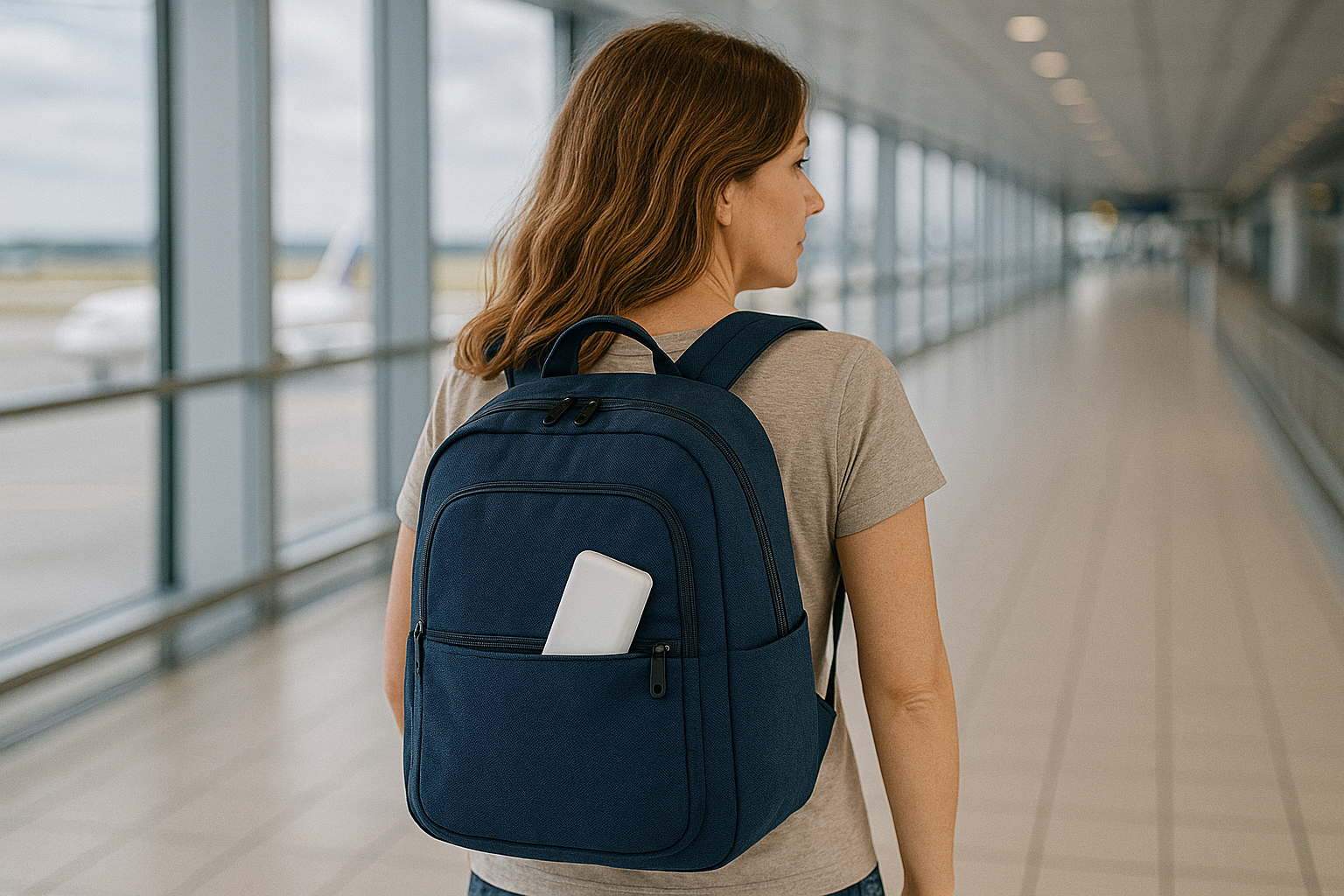
Are you allowed to use a powerbank on a plane?
Whether you may use your powerbank during a flight varies by airline. Most airlines permit you to charge devices as long as the powerbank is not used during taxiing, take-off, or landing.
However, an increasing number of airlines are restricting on-board use for safety reasons. A faulty or overheated powerbank can produce smoke or heat, which may trigger an emergency procedure. Emirates, for example, has completely banned the use of powerbanks on board from October 2025 onwards.
Our advice: only use your powerbank when genuinely necessary, place it on a hard, well-ventilated surface (such as the tray table), and do not leave it under clothing or blankets whilst charging.
Rules by airline
Most airlines follow the same international safety regulations, but the precise limits and conditions can differ slightly. Below you'll find the guidelines for the most popular airlines amongst Dutch travellers.
KLM
- Cabin baggage: permitted in cabin baggage only, not in hold baggage.
- Capacity: up to 100 Wh (≈ 27,000 mAh) permitted.
- Authorisation: required for powerbanks between 100 and 160 Wh (≈ 27,000–43,000 mAh).
- Quantity: maximum of 20 loose batteries or powerbanks under 100 Wh.
- Use during the flight: charging is usually permitted, but in the event of damage or overheating, the powerbank must be switched off immediately.
Transavia
- Cabin baggage: permitted in cabin baggage only, not in hold baggage.
- Capacity: up to 100 Wh (≈ 27,000 mAh) permitted.
- Authorisation: required for powerbanks between 100 and 160 Wh (≈ 27,000–43,000 mAh).
- Quantity: maximum of 20 units under 100 Wh.
- Use during the flight: permitted, but keep the powerbank in sight and not under clothing or blankets.
easyJet
- Cabin baggage: permitted in cabin baggage only, not in hold baggage.
- Capacity: up to 100 Wh (≈ 27,000 mAh) permitted.
- Authorisation: required for powerbanks between 100 and 160 Wh (≈ 27,000–43,000 mAh).
- Quantity: no specific maximum stated, but the general IATA rule (maximum of 20 units) applies as a guideline.
- Use during the flight: permitted, except during taxiing, take-off, and landing. Smart bags are only permitted if the battery is removable.
Ryanair
- Cabin baggage: permitted in cabin baggage only, not in hold baggage.
- Capacity: up to 100 Wh (≈ 27,000 mAh) permitted.
- Authorisation: required for powerbanks between 100 and 160 Wh (≈ 27,000–43,000 mAh).
- Quantity: no official maximum stated, but bear in mind the international limit of 20 units.
- Use during the flight: officially permitted, but some airlines (such as Emirates or Singapore Airlines) have introduced restrictions. Always check the safety instructions for your specific flight.
British Airways
- Cabin baggage: permitted in cabin baggage only, not in hold baggage.
- Capacity: up to 100 Wh (≈ 27,000 mAh) permitted.
- Authorisation: required for powerbanks between 100 and 160 Wh (≈ 27,000–43,000 mAh).
- Quantity: maximum of two spare batteries or powerbanks per person, with terminals protected or stored in original packaging.
- Smart baggage: if the lithium battery cannot be readily removed from smart baggage, the bag will not be accepted on the flight.
- Use during the flight: charging powerbanks in-flight is not permitted on many routes and may be restricted by local rules. Note that British Airways' short-haul aircraft no longer include AC outlets; passengers must use USB-A or USB-C ports.
Please note: although the rules are largely the same, policies on in-flight use may differ, and British Airways now has additional restrictions compared to some other airlines, particularly regarding the two-powerbank limit and the in-flight charging ban. If in doubt, you can always check with the airline's customer service or on their website.
Rules by region (EU, UK, US, China, Australia/New Zealand)
Most countries follow the international IATA guidelines for the transport of lithium batteries. However, checks and admission requirements can differ slightly by region.
European Union
- Permitted in cabin baggage only.
- Up to 100 Wh (≈ 27,000 mAh) permitted.
- 100–160 Wh (≈ 27,000–43,000 mAh) permitted with the airline's authorisation.
- More than 160 Wh (> 43,000 mAh) prohibited.
United Kingdom
The UK Civil Aviation Authority (CAA) applies the same guidelines as the EU following Brexit:
- Permitted in cabin baggage only.
- Up to 100 Wh (≈ 27,000 mAh) permitted.
- 100–160 Wh (≈ 27,000–43,000 mAh) permitted with authorisation.
- More than 160 Wh (> 43,000 mAh) prohibited.
There are therefore no noticeable differences for travellers departing from the UK.
United States
The American TSA and FAA likewise follow the IATA rules:
- Permitted in cabin baggage only.
- Up to 100 Wh (≈ 27,000 mAh) permitted.
- 100–160 Wh (≈ 27,000–43,000 mAh) permitted with authorisation.
- More than 160 Wh (> 43,000 mAh) prohibited.
Please note: checks in the US are strict, and powerbanks without a clear Wh or mAh label may be refused.
China
Rules in China are slightly stricter and checks more thorough:
- Permitted in cabin baggage only.
- Up to 100 Wh (≈ 27,000 mAh) permitted.
- 100–160 Wh (≈ 27,000–43,000 mAh) permitted with authorisation.
- More than 160 Wh (> 43,000 mAh) prohibited.
In addition, the powerbank must carry a 3C certification and a clearly visible label showing its capacity (Wh or mAh).
Australia & New Zealand
The aviation authorities CASA (Australia) and CAA (New Zealand) follow the same IATA standards:
- Permitted in cabin baggage only.
- Up to 100 Wh (≈ 27,000 mAh) permitted.
- 100–160 Wh (≈ 27,000–43,000 mAh) permitted with authorisation.
- More than 160 Wh (> 43,000 mAh) prohibited.
Security staff may ask you to show the labelling; powerbanks without a label may be refused.
Conclusion: in virtually all countries, the same thresholds apply: up to 100 Wh (≈ 27,000 mAh) freely permitted, 100–160 Wh (≈ 27,000–43,000 mAh) with authorisation, and above 160 Wh (> 43,000 mAh) prohibited. Only in China are checks stricter with regard to certification and labelling.
The best powerbanks you're allowed to take on a plane
All models listed below remain under 100 Wh (≈ 27,000 mAh), so you can take them in your cabin baggage without any issues.
We've divided them into two categories: small and handy for short trips, and large but permitted for longer journeys or heavier devices.
Small and handy – perfect for short trips
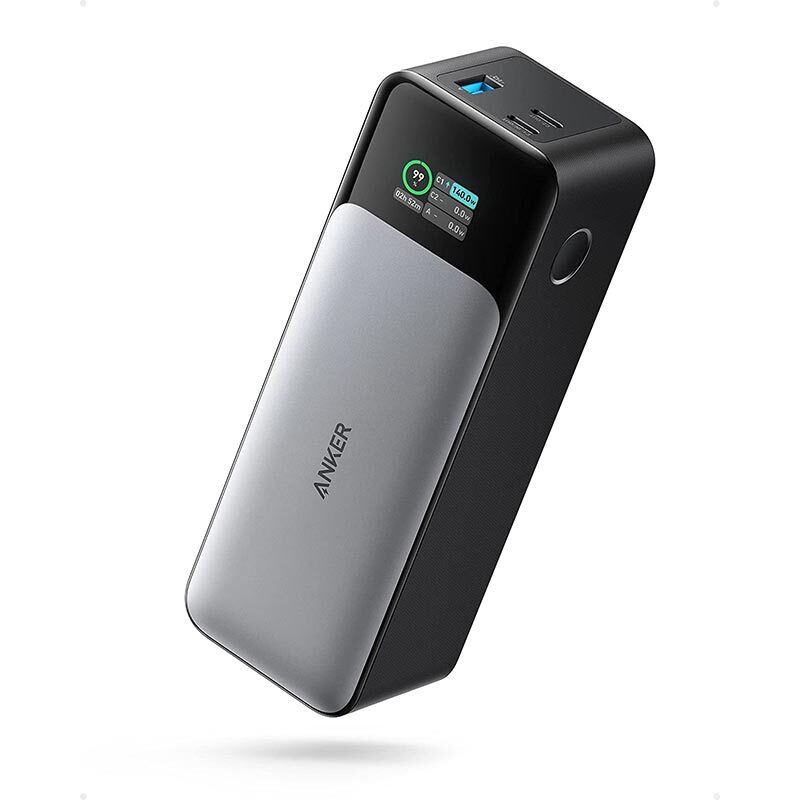
INIU Pocket Rocket P50 – 10,000 mAh (≈ 37 Wh) Small, fast, and affordable. This compact powerbank fits in any jacket pocket and charges your phone multiple times. Ideal for city breaks or short-haul flights.
Alternative for iPhone users: Anker 622 MagGo – 5,000 mAh (≈ 18.5 Wh) With MagSafe support and a handy kickstand. Perfect for on the go and safely within aviation regulations.
Large but permitted – for laptops and long journeys
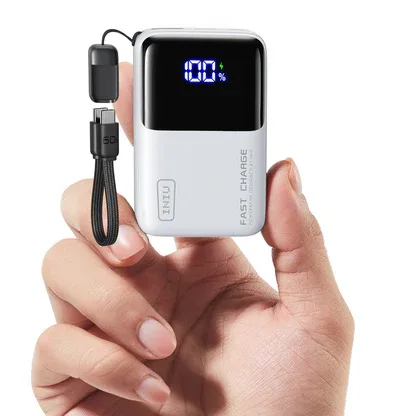
Anker 737 Power Bank (PowerCore 24K) – 24,000 mAh (≈ 86 Wh) A powerful and reliable powerbank with up to 140 W output, suitable for laptops, tablets, and phones. Stays under 100 Wh and is therefore fully permitted on a plane.
Baseus Blade 100W – 20,000 mAh (≈ 74 Wh) Ultra-slim design, high charging speed, and a sleek finish. Suitable for both phones and laptops, and easy to pack in your cabin baggage.
Checklist: travelling safely with your powerbank
- Stay under 100 Wh (≈ 27,000 mAh)
- Carry in cabin baggage only
- Protect the contact points
- Request authorisation for 100–160 Wh (≈ 27,000–43,000 mAh)
- Capacity clearly visible on the label
- Do not use if the airline prohibits it
Flight delayed, cancelled, or overbooked? We can help!
At Flight Delayed UK, we help passengers make the most of their rights.
Has your flight been delayed, cancelled, or were you denied boarding? You may be entitled to up to €600 in flight compensation per passenger under the EU Regulation 261/2004.
Our experts check whether you qualify and handle everything for you — no hassle, no hidden costs.
So you can travel on with peace of mind, with a fully charged phone and your claim in good hands.
Check your flight at Flight Delayed UK — no win, no fee.



Did you like this content ?
Thanks you made our day!
Help us be better!
Well received, thanks!