Sleeping in airports: rules, tips and what the airline owes you
Thursday, October 8, 2026
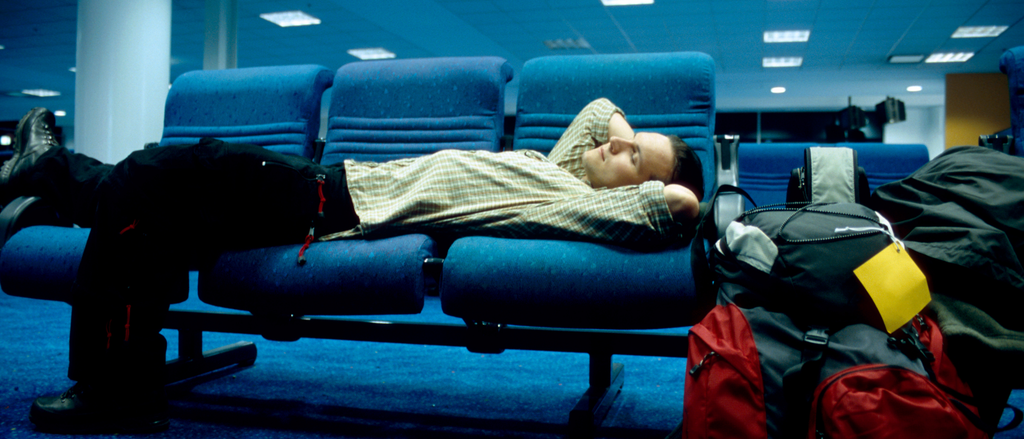
Sleeping in airports is allowed in most cases, although it often depends on the airport. Many UK and European airports stay open continuously, and staff are used to passengers having a nap in the terminal. However, before claiming one of the rows of seats for the night, it’s better to be prepared and to know exactly what to expect, and whether it is even necessary to do it, since in some cases the airline owes you accommodation for the night.
Here's everything you need to know about sleeping at the airport, from the rules and the best spots to the rights most passengers don’t know they have.
Can you sleep in the airport overnight?
In most cases, yes. Sleeping at the airport isn't illegal, and at large hubs it's a normal sight, especially after a wave of delays or cancellations. Whether you'll be left in peace depends on three things.
Is the airport open all night? Big hubs usually keep at least part of the terminal open 24 hours, even when no flights are taking off. Some smaller regional airports close the terminal overnight and ask everyone to leave. To avoid inconveniences, check the airport's website or ask at the information desk before you settle in.
Are you airside or landside? Airside is everything after security. It's usually quieter, closer to your gate and more comfortable, but you can only stay there if you have a valid boarding pass for a flight that's still scheduled to leave. Usually, you can access this area only a few hours before your flight. Landside, before security, is open to anyone, which also means more noise, more cleaning machines and less security.
Are there lots of delays or cancellations? After a wave of flight delays or cancellations, hundreds of stranded passengers may be looking for a place to sleep at the same time. Benches, quiet corners and sockets fill up fast, and sleeping pods and nearby hotels can sell out within hours. If you know you’ll be stuck for the night, claim your spot early.
Sleeping at the airport before an early flight
Not everyone who sleeps at the airport is experiencing a delayed or cancelled flight. If your flight leaves at 6am and the first train doesn't get you there in time, spending the night in the terminal can be cheaper than a taxi or an airport hotel.
Before you plan on it, check a few things:
- Is the terminal open overnight? If the airport closes at night, you'll be waiting outside.
- When does security open? You'll usually have to stay landside until security opens, often a couple of hours before the first departures. Landside areas are noisier and have fewer places to sleep.
- When does check-in or bag drop open? If you have hold luggage, you may have to keep it with you until then.
- Are there cheaper alternatives? Some airports have night buses, and airport hotels sometimes cost less than you'd expect for a few hours’ sleep.
One difference from a delay: if you choose to sleep at the airport before an early flight, the airline doesn't owe you anything. The right to care only applies when your flight is delayed or cancelled.
Where to sleep at the airport: the best and worst spots
Not every corner of a terminal is equal when it comes to sleeping in an airport. Here's where to head, and which places to avoid, if you're stuck for the night.
Good spots
- Quiet gates and seating areas (airside): gates with no more departures that night, and the seating around them, are often the quietest spots in the terminal. Some airports close off whole piers overnight, so you may have to stay in the central area.
- Benches without armrests: rare, but worth hunting for. Many airport seats have fixed armrests, which makes lying down almost impossible.
- Rest zones and sleep pods (airside or landside): some airports have dedicated quiet areas, reclining chairs or pods you can book by the hour. Not every airport has them, and some close at night, so check before you rely on one.
- Near a socket: a spot beside a charging point is worth more than a slightly softer seat. However keep in mind that available sockets may be hard to find.
- Seating near arrivals (landside): if you can't get through security yet, the arrivals area is often your best bet. It gets quieter once the last flights of the night have landed.
Good to know: gates, and some rest zones and sleep pods, are airside. You can only reach them if you're already through security, for example because your flight was delayed or you're transferring. If you're arriving early for a morning flight, security is usually closed at night, and once it opens you'll need a valid boarding pass to get through. Until then, seating near arrivals is your best option.
Spots to avoid
- Right under a speaker: announcements carry on through the night in many terminals.
- Main walkways and cleaning routes: floor cleaners work overnight and will come for you.
- Isolated corners: they're quiet, but less safe. Stay where other travellers are resting.
- Near the entrance doors: every time they open, a blast of cold air will enter and disrupt your sleep.
Airport sleeping pods: worth it?
If the floor isn't for you, airport sleeping pods are the middle ground between a bench and a hotel. They're small private cabins with a bed, a lockable door and usually a charging point, booked by the hour.
Pods are found at a growing number of larger airports. In the UK, the pod hotels at Gatwick and Heathrow are landside, so you don't need to go through security, which makes them handy before an early flight. At some airports abroad, such as Paris Charles de Gaulle and Amsterdam Schiphol, they're airside, so you can only use them once you're through security. Prices vary by airport and by how long you stay, but a few hours' stay usually costs less than a hotel room. During big disruptions they sell out fast, so book as soon as you know you're stuck.
How to actually sleep at the airport: a survival kit
If you're staying the night, a little preparation turns a miserable night into a merely uncomfortable one.
- Pack a mini sleep kit in your hand luggage: an eye mask, earplugs or noise-cancelling headphones and a travel pillow are almost necessities. They'll help on the flight too: read our tips on how to sleep well on a plane.
- Wear layers: terminals are often cold at night because the air conditioning keeps running. A hoodie or scarf doubles as a blanket.
- Keep your power bank charged: sockets are the most fought-over resource in any terminal.
- Find the quiet zones: look for areas away from cleaning routes and announcement speakers.
- Keep your valuables close: use your bag as a pillow or loop a strap around your arm or leg. It’s better not to isolate yourself, but also be mindful of other travellers.
- Set an alarm: gate changes happen, and nobody will wake you. Set a few alarms through the night so you can check the departure board.
- Bring an empty water bottle: fill it after security instead of paying airport prices.
- Consider a sleep pod: if the night is long, a few hours in a real bed can be worth the cost. But before you pay for anything, read the next section.
Wait: the airline might owe you a hotel
Here's the plot twist most stranded travellers miss. If your flight is covered by UK261 or EU261 (flights departing the UK or EU, or arriving there on a UK or EU airline) and it's delayed or cancelled overnight, the airline has to look after you. This is called the right to care, and it applies no matter what caused the delay.
The right to care includes:
- Food and drink in proportion to the waiting time, usually as vouchers.
- A hotel room if you have to stay overnight.
- Transport between the airport and the hotel.
- A way to contact people, such as phone calls or emails.
If the airline doesn't offer any of this, ask at the airline desk. If there's no one to ask, book something reasonable yourself and keep every receipt. A standard hotel near the airport is reasonable. A presidential suite is not, however tempting at 2am.
On top of the right to care, you may also be owed compensation of £220 to £520 per passenger if your flight was cancelled or you reached your final destination more than 3 hours late, and the airline was at fault.
Check on Flight Delayed UK if you’re entitled to compensation.
Frequently asked questions about sleeping in airports
Are you allowed to sleep in the airport? Yes. Sleeping at the airport is allowed at most airports, as long as the terminal is open and you're a genuine passenger. Airports also differ based on where you can sleep, and what areas close or stay open for the night, so it may be useful to check that before planning an airport sleepover.
Is it safe to sleep in the airport? Generally, yes. Airports have security staff and cameras around the clock. The main risk is theft, so keep your valuables on you, use your bag as a pillow and sleep near other travellers rather than in an empty corner.
Will security wake me up? They might, to check you're a passenger. Show your boarding pass or booking and you'll usually be left alone.
Does the airline have to pay for an airport overnight hotel if my flight is delayed? If your flight is covered by UK261 or EU261, yes. The airline must offer a hotel and transport to it when you have to stay overnight, whatever caused the delay.
Can I claim compensation as well as a hotel? Possibly. The hotel is part of your right to care. Compensation of £220 to £520 is separate and depends on the length of the delay and whether the airline was at fault.



Did you like this content ?
Thanks you made our day!
Help us be better!
Well received, thanks!