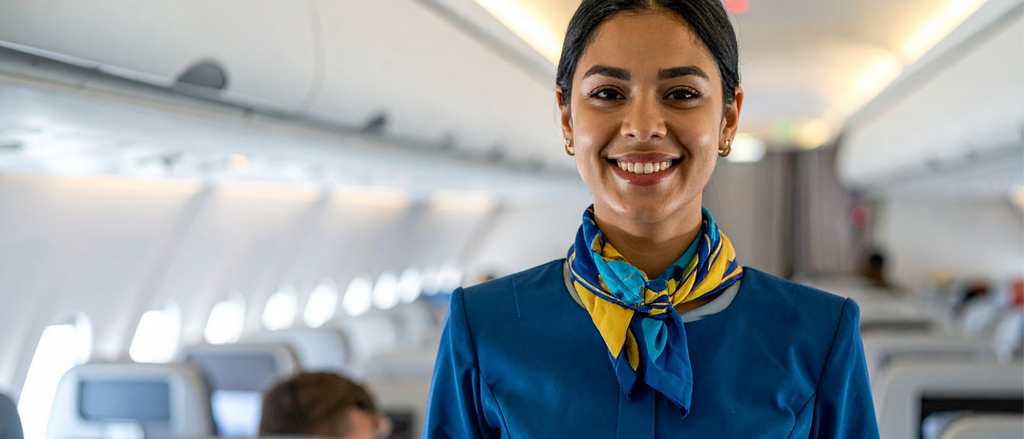
How to become a flight attendant in the UK
Thursday, July 9, 2026
You can become a flight attendant in the UK through a college course, a cabin crew apprenticeship, or by applying directly to an airline. Each route comes with the same core requirements: you must be at least 18, hold the right to work in the UK, and pass a medical check and enhanced background screening. But airlines look beyond the basics — competition for seats is real, and preparation makes a genuine difference. Here's everything you need to know.
What does a flight attendant actually do?
The role goes by several names: cabin crew, flight attendant, air steward, air stewardess. Whatever the title, your primary responsibility is the safety of everyone on board. Customer service is equally central, though passengers often experience it more than the safety side.
Day-to-day tasks split across three stages:
Before the flight:
- Attending a briefing on the route and schedule
- Checking safety equipment and onboard supplies
- Greeting passengers and verifying documents
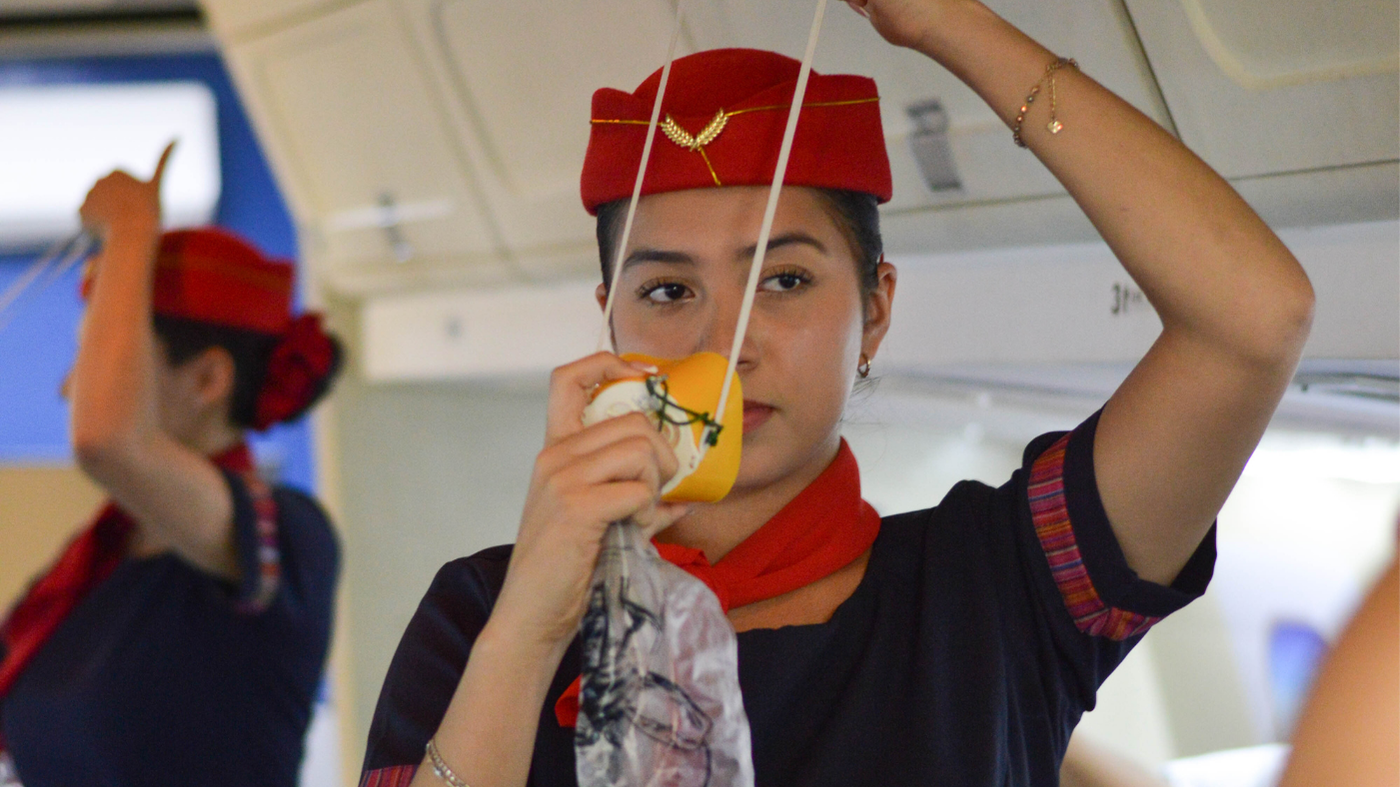
- Demonstrating emergency and safety procedures
During the flight:
- Responding to passenger requests and ensuring comfort
- Serving food and drinks, managing dietary requirements, selling duty-free items
- Making announcements
- Providing first aid and managing emergencies calmly
After landing:
- Ensuring passengers leave safely with all belongings
- Completing a flight report and logging any incidents
Do you meet the requirements?
UK airlines set their own criteria, but there are common standards across the industry.
Age, fitness and physical requirements
You must be at least 18 at the time of your application or the start of your training course. Most airlines require you to fall within a height range of approximately 5ft 2in (157cm) to 6ft 2in (188cm), with weight in proportion to height. Some carriers also require you to reach a height of 6ft 2in with bare feet flat on the floor.
You will need to:
- Pass a medical assessment (typically arranged at your own cost)
- Swim at least 25 metres unaided
- Pass DBS and enhanced background checks
- Be willing to undergo drug and alcohol testing
Most airlines do not permit visible tattoos or piercings that cannot be covered discreetly by the uniform.
Right to work and travel documents
You must have the right to live and work in the UK without restriction. You will also need a valid passport that allows you to travel to all destinations the airline operates, with no entry restrictions.
Most carriers also require you to live within 90 minutes of your base airport and be available to report for duty at any time across a 24/7 flight schedule.
English and education
Good written and spoken English is a firm requirement across all UK airlines. For most direct-application roles, no strict academic qualifications are set beyond a good standard of general education. For apprenticeship programmes, GCSEs in English and Maths at grade 4/C or above are typically expected.
A second language is a genuine advantage, particularly for airlines operating long-haul or international routes.
Three routes into a cabin crew career
1. College courses
You can take an introductory cabin crew course at college, or study a cabin crew module as part of a travel and tourism qualification. A Level 2 Air Cabin Crew qualification is available through providers across the UK, with flexible and part-time study options in some cases.
Private training providers also offer short preparation courses, typically 9 to 10 weeks long, covering safety procedures, customer service, and the recruitment process. These are not mandatory, but they can strengthen an application and help you prepare for assessment days.
2. Apprenticeships
The Cabin Crew Level 3 Advanced Apprenticeship takes approximately 12 months and is equivalent to two A-levels. You combine on-the-job training with structured learning covering safety and emergency procedures, first aid, customer service, and aviation security.
Apprentices receive a salary and may be eligible for flight duty allowances and commission on top of it. Airlines such as TUI offer seasonal apprenticeship programmes, with roles typically starting in spring and running through to autumn.
3. Direct application to airlines
Many candidates apply directly to airlines without a formal cabin crew qualification. Carriers including British Airways, easyJet, Ryanair, Virgin Atlantic, and TUI recruit regularly, each setting their own criteria.
A typical application process looks like this:
- Online application with CV and screening questions
- Online assessments covering situational judgement and personality
- Assessment day (virtual or in-person), including group exercises and individual interviews
Some airlines run up to nine stages. Preparation at each step counts.
What skills do airlines look for?
Beyond the physical requirements, airlines want people who are genuinely good with people and can stay composed under pressure. The qualities hiring teams consistently value include:
- Strong customer service instinct
- Clear verbal communication
- Ability to work as part of a team
- Resilience and calm in stressful situations
- Flexibility to work irregular hours, including nights, weekends and bank holidays
Experience in a customer-facing role — hospitality, retail, care work — is consistently valued, even when it is not a formal requirement.
What can you expect to earn?
According to the National Careers Service, starting salaries for cabin crew in the UK typically sit around £19,000, rising to around £28,000 for experienced crew. Pay varies significantly between airlines. Flight duty allowances, commission on in-flight sales, and staff travel benefits often supplement the base salary.
What does cabin crew training involve?
Once hired, airlines run internal training programmes lasting approximately 4 to 6 weeks. Training is full-time and covers safety and emergency procedures, first aid, aviation security, customer service, and practical exercises including simulated evacuations.
You will need to pass both theory and practical exams before you operate your first flight. Annual recertification is a requirement, so ongoing learning is built into the role.
Tips to stand out in the application process
- Research the airline before each stage. Hiring teams notice genuine familiarity with the brand and its routes.
- Lead with your customer-facing experience in applications, even if it is outside aviation.
- Practice situational judgement questions — they are a common early filter and have a specific format worth preparing for.
- Prepare clear examples of times you have handled difficult or stressful situations with composure.
- Attend assessment days looking the part. Airlines assess presentation from the moment you arrive.
- If rejected, note that many airlines require a six-month wait before reapplying. Use that time to build experience.
Frequently asked questions
Do I need a qualification to become a flight attendant in the UK?
No formal qualification is required to apply directly to most airlines. However, GCSEs in English and Maths at grade 4/C or above are typically expected for apprenticeship programmes. Some candidates choose to complete a private training course to strengthen their application, though this is not mandatory and does not guarantee an offer.
How long does cabin crew training take?
Once hired by an airline, training typically lasts 4 to 6 weeks and is full-time. You must pass practical and theory exams before your first flight. If you enter through an apprenticeship, the full programme takes around 12 months and includes both structured learning and on-the-job training.
What is the minimum age to become a flight attendant?
You must be 18 years of age or older at the time of your application or the start of your training course. There is no upper age limit across the industry, though you must meet the physical and fitness requirements set by the specific airline you apply to.
Can I become cabin crew if I have tattoos?
Most airlines do not permit visible tattoos that cannot be covered discreetly by the uniform during the working day. Requirements vary between carriers, so it is worth checking the specific uniform and grooming policy before applying rather than assuming a blanket rule applies.
What happens if my application is unsuccessful?
Many airlines require unsuccessful candidates to wait six months before reapplying for the same role. If you do not progress past an assessment centre, use the waiting period to strengthen any gaps in experience and revisit your preparation before the next campaign.
Whether you are planning your first flight as crew or travelling as a passenger, knowing your rights in the air matters. If you have experienced a delayed or cancelled flight, you may be entitled to compensation under the EU261 regulation. Flight Delayed helps passengers understand their rights and manages the claim process on their behalf - no win, no fee.
Check your eligibility with Flight Delayed today.



Did you like this content ?
Thanks you made our day!
Help us be better!
Well received, thanks!