Can you take durian on a plane? Everything you need to know before you fly
Wednesday, May 13, 2026
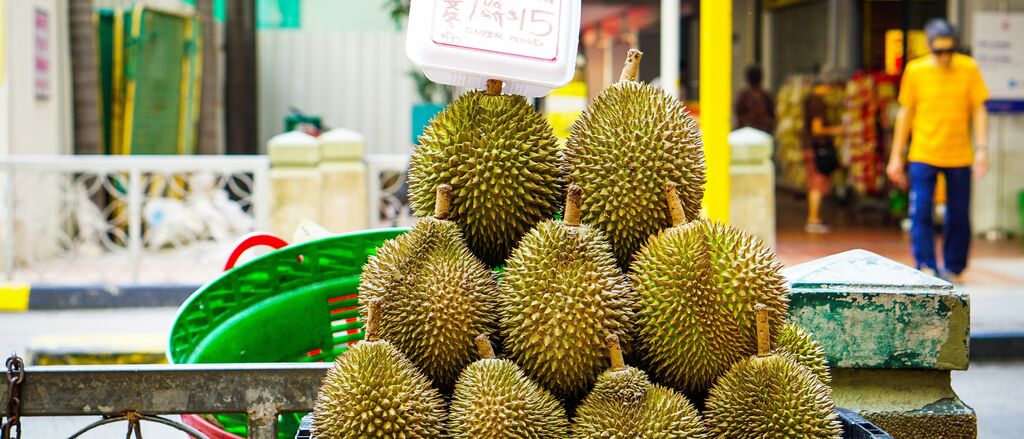
If you've ever travelled through Southeast Asia, you've probably encountered the durian — the spiky, pungent fruit that divides opinion like no other food on earth. Fans call it the "King of Fruits." Everyone else calls it something far less flattering. But if you're wondering can you bring durian on a plane, you're not alone. It's one of the most Googled food-travel questions among passengers flying to and from Southeast Asia — and the answer is more complicated than a simple yes or no.
Here's everything you need to know before you pack that durian in your carry-on.
What makes durian so controversial on planes?
Before we get into the rules, it's worth understanding why durian is such a big deal in the first place.
Durian has an extraordinarily powerful smell — often described as a combination of rotten onions, turpentine, and gym socks, though devotees would argue it's closer to rich custard with a hint of almond. The smell is so intense that the fruit is banned in hotels, public transport, and shopping malls across much of Southeast Asia.
Now imagine that scent sealed inside an aircraft cabin at 35,000 feet with recycled air and nowhere to escape. You can see the problem.
Can you take durian on a plane? The short answer
It depends entirely on the airline and the route.
There is no universal aviation rule banning durian from flights. Instead, individual airlines set their own policies — and those policies vary significantly. Some carriers have an outright ban; others allow it under strict conditions; and a few don't address it at all.
Airlines that ban durian
Several major carriers, particularly those operating heavily in Southeast Asia, have explicit bans on durian aboard their aircraft:
- AirAsia – One of the most well-known bans. AirAsia prohibits durian in both the cabin and the hold on most of its routes.
- Scoot – Singapore-based low-cost carrier Scoot bans durian entirely from all flights.
- Jetstar Asia – Durian is not permitted on board.
- Thai AirAsia – Follows the same policy as its parent brand.
These airlines are serious about enforcement. Ground staff are trained to identify durian (by smell, if nothing else), and passengers found attempting to smuggle it on board may be asked to dispose of it before boarding.
Airlines that may allow durian under conditions
Some carriers allow durian, but only in checked baggage and only when it is vacuum-sealed or packaged in airtight containers. This includes several full-service carriers on certain routes. The logic is simple: if the smell can't escape, the problem largely disappears.
If you're flying with an airline not listed above, always check directly with the carrier before travelling. Policies can change, and the consequences of getting it wrong — losing your durian at the gate or causing a scene on board — aren't worth the risk.

Can you bring durian on a plane in your carry-on?
For most airlines that have a durian policy, carry-on durian is a hard no. Even if checked baggage durian is permitted in sealed packaging, bringing fresh durian into the cabin is almost universally prohibited on airlines that have addressed the issue.
Practically speaking, airport security staff may also intervene. While durian isn't a security threat in the traditional sense, some airports — particularly in Singapore (Changi), Kuala Lumpur (KLIA), and Bangkok (Suvarnabhumi) — have their own rules about strong-smelling foods on the premises, and you may be asked to dispose of it before you even reach the gate.
What about customs and import rules?
This is a separate issue from airline policy, and it matters a lot if you're planning to bring durian into another country.
Bringing durian into the EU
If you're flying back to Europe with durian, the rules are clear: fresh durian from outside the EU is not permitted under EU phytosanitary (plant health) regulations. The EU restricts the import of many fresh fruits and vegetables from third countries to prevent the introduction of pests and plant diseases. Durian, as a fresh tropical fruit originating in Southeast Asia, falls under these controls.
This means that if you land at Amsterdam Schiphol, Frankfurt, Paris Charles de Gaulle, or any other EU airport with fresh durian in your luggage, customs officials are entitled to confiscate it. You are also legally required to declare it — failing to do so can result in a fine, and in some cases, more serious consequences under EU customs law.
The rules do not apply uniformly to all durian products. Processed or commercially packaged durian — such as freeze-dried durian chips, durian paste in sealed tins, or durian-flavoured confectionery — may be permitted, provided they meet EU food safety standards and are properly labelled. When in doubt, check the European Commission's TRACES NT system or contact your national customs authority before you travel.
If you're travelling within the EU (for example, connecting through a Schengen airport with durian you've already cleared customs with), the rules are more relaxed — but airline policies still apply regardless of where you are in the journey.
Other regions
- Australia and New Zealand have strict biosecurity laws. Fresh durian is generally not permitted, and failure to declare it can result in heavy fines.
- The United States has USDA restrictions on many fresh fruits from Southeast Asia, including fresh durian in some cases.
- Within Southeast Asia, moving durian between countries is generally less restricted, but always worth checking.
Freeze-dried or vacuum-packed durian products are often treated differently from fresh fruit, so if you're a serious durian lover looking to travel with it, processed formats may be your best bet.
Tips if you really want to travel with durian
If you've set your heart on bringing durian home from your trip, here's how to give yourself the best chance:
- Check your airline's specific policy — call them or check the FAQ on their website before you travel.
- Choose checked baggage over carry-on — even where permitted, this is always the more likely option.
- Invest in proper vacuum sealing — don't rely on cling film or a plastic bag. A proper airtight seal is the minimum standard most airlines will accept.
- Consider durian products instead of fresh fruit — durian-flavoured sweets, freeze-dried durian chips, durian paste in sealed tins, and durian ice cream (packed with dry ice) are far easier to travel with and widely available at airports in Kuala Lumpur, Bangkok, and Singapore.
- Declare it at customs — if you're unsure whether you can bring it into your destination country, always declare it. The fine for not declaring is almost always worse than having it confiscated.
What happens if you try to sneak durian on board?
Let's be honest — durian is not the easiest thing to hide. Airport staff in Southeast Asia are very familiar with the smell, and airlines that ban it take the policy seriously.
If you're caught trying to bring durian on board in violation of your airline's policy, you will most likely be asked to dispose of it before boarding. In rare cases, particularly flagrant violations could result in a delay to your flight while the issue is resolved. There's no record of anyone being denied boarding solely for durian, but it's an embarrassing situation you'd rather avoid.
The bottom line
Can you take durian on a plane? Sometimes — but rarely in the cabin, and only in checked baggage with proper packaging on airlines that explicitly permit it. For most low-cost carriers in Southeast Asia, the answer is simply no.
If you're a durian devotee, the safest approach is to enjoy your fill while you're in-country, pick up some well-packaged durian products at the airport as a compromise, and save the fresh fruit experience for your next visit.
And if you're sitting next to someone who just discovered their airline does allow vacuum-packed durian in the hold — well, fingers crossed for a short flight.
Was your flight delayed or cancelled? You may be entitled to compensation
Durian drama aside, flight disruptions happen for all sorts of reasons — and when they do, you may have the right to claim compensation under EU Regulation 261/2004. This regulation protects passengers travelling to or from EU airports and entitles them to up to €600 per person in compensation when a flight is delayed by three hours or more, cancelled at short notice, or overbooked.
That's where Flight-Delayed.com comes in. We specialise in helping passengers claim the compensation they're owed — without the hassle of dealing with airlines directly. Our team handles the entire claims process on your behalf, from checking your eligibility to chasing the airline and getting you paid.
Here's how it works:
- Check your flight — Enter your flight details on Flight-Delayed.com to find out instantly whether your disruption qualifies for compensation.
- We handle the claim — Our legal team takes over, managing all communication with the airline on your behalf.
- You get paid — We only charge a fee if your claim is successful. No win, no fee.
Disrupted flights affect millions of European passengers every year, and the majority never claim what they're legally owed. Don't leave money on the table — check your flight today at Flight-Delayed.com.



Did you like this content ?
Thanks you made our day!
Help us be better!
Well received, thanks!