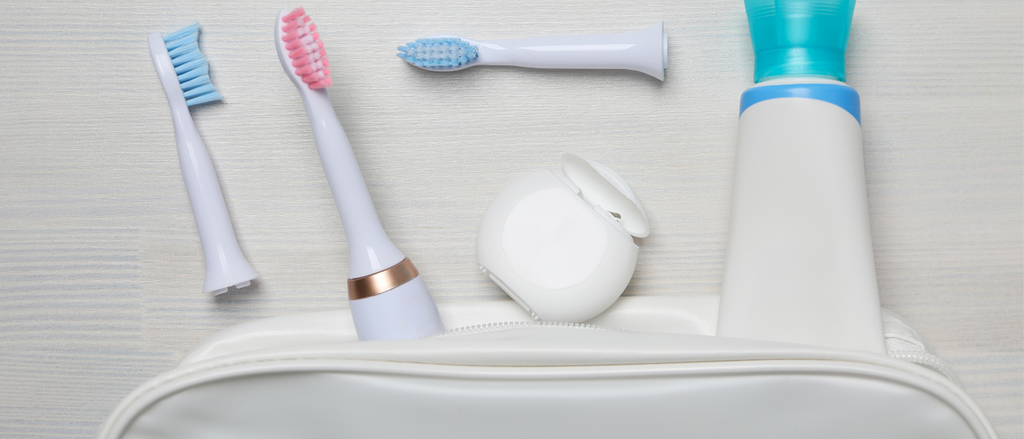
Can you take an electric toothbrush on a plane?
Tuesday, June 30, 2026
Yes, you can take an electric toothbrush on a plane. Electric toothbrushes are permitted in both hand luggage and checked bags, but the battery type inside your toothbrush determines exactly where it needs to go.
Getting this wrong could mean your bag is flagged at security, or worse, your toothbrush ends up confiscated at the gate. Here's what you need to know before you fly from a UK airport.
What the UK rules say
The UK Civil Aviation Authority (CAA) and gov.uk both set out rules for travelling with electronic devices and battery-powered items. Electric toothbrushes fall into the category of portable electronic devices, and the key consideration is whether they contain a lithium battery.
The rule is straightforward: devices with lithium-ion batteries must travel in your carry-on hand luggage, not in the hold. This applies to flights departing from UK airports and most international routes.
Always check with your airline before you fly, as individual carriers can apply stricter restrictions on top of the standard rules.
Lithium-ion vs alkaline batteries: where to pack yours
Most modern rechargeable electric toothbrushes (including popular brands like Oral-B and Philips Sonicare) use built-in lithium-ion batteries. These must go in your hand luggage.
Older or budget models that run on AA alkaline batteries can go in either your hand luggage or your checked bag.
Not sure which type your toothbrush uses? Check the product packaging or the manufacturer's website. If it charges on a docking station or via USB, it almost certainly has a lithium-ion battery.
| Battery type | Hand luggage | Checked bag |
|---|---|---|
| Lithium-ion (rechargeable) | Yes | No |
| Alkaline (AA batteries) | Yes | Yes |
Tips for travelling with an electric toothbrush
A few practical steps will save you hassle at security:
- Use a travel case. A hard case protects the brush head and stops it activating accidentally in your bag.
- Pack spare brush heads. Replacement heads can be difficult to find abroad, so bring an extra.
- Don't forget the charger. Lithium-ion toothbrushes need a charger, and you're unlikely to find a compatible one at your destination.
- Keep it accessible in your bag. If security asks you to remove electronics for screening, you won't want to be digging through a packed bag.
Frequently asked questions
Do I need to declare my electric toothbrush at airport security?
No. You don't need to declare an electric toothbrush at security. Security staff may ask you to remove it from your bag for screening, but this is routine for electronic items and nothing to be concerned about.
Can I put my Oral-B or Philips Sonicare in my checked bag?
No, not if it's rechargeable. Both Oral-B and Philips Sonicare toothbrushes use lithium-ion batteries, which means they must travel in your hand luggage under UK and international aviation rules. Packing them in your checked bag is not permitted.
Is there a battery size limit for electric toothbrushes on planes?
Yes, there is a lithium battery limit of 160Wh for personal devices. In practice, electric toothbrushes use tiny batteries, typically 1–3Wh, so this limit is not something you'll ever come close to. It's mainly relevant for larger devices like e-bikes or professional camera equipment.
Can I take a spare rechargeable electric toothbrush battery on a plane?
Spare lithium-ion batteries must always travel in hand luggage, never in the hold. If you carry a separate spare battery (rather than a second toothbrush), it's worth letting the security officer know when you put your bag through the scanner.
What if my electric toothbrush turns on in my bag?
Some electric toothbrushes have a travel lock. Check your manual. If yours doesn't, pack it in a travel case or place it in a toiletry bag with the brush head removed to prevent it from activating mid-flight.
One last thing before you fly
Sorting your hand luggage is the easy part of travel. If things go wrong at the airport, such as a long delay, a cancelled flight, or denied boarding, you may be entitled to compensation under UK261. Eligible passengers can claim up to £220, £350, or £520 depending on the flight distance and the cause of the disruption.
Check your eligibility with Flight Delayed UK before your journey, or start your claim with Flight Delayed UK if your flight has already been affected - no win, no fee.



Did you like this content ?
Thanks you made our day!
Help us be better!
Well received, thanks!